Category: Convert Tools

  • Convert 90°C to Fahrenheit Easily

    Convert 90°C to Fahrenheit Easily

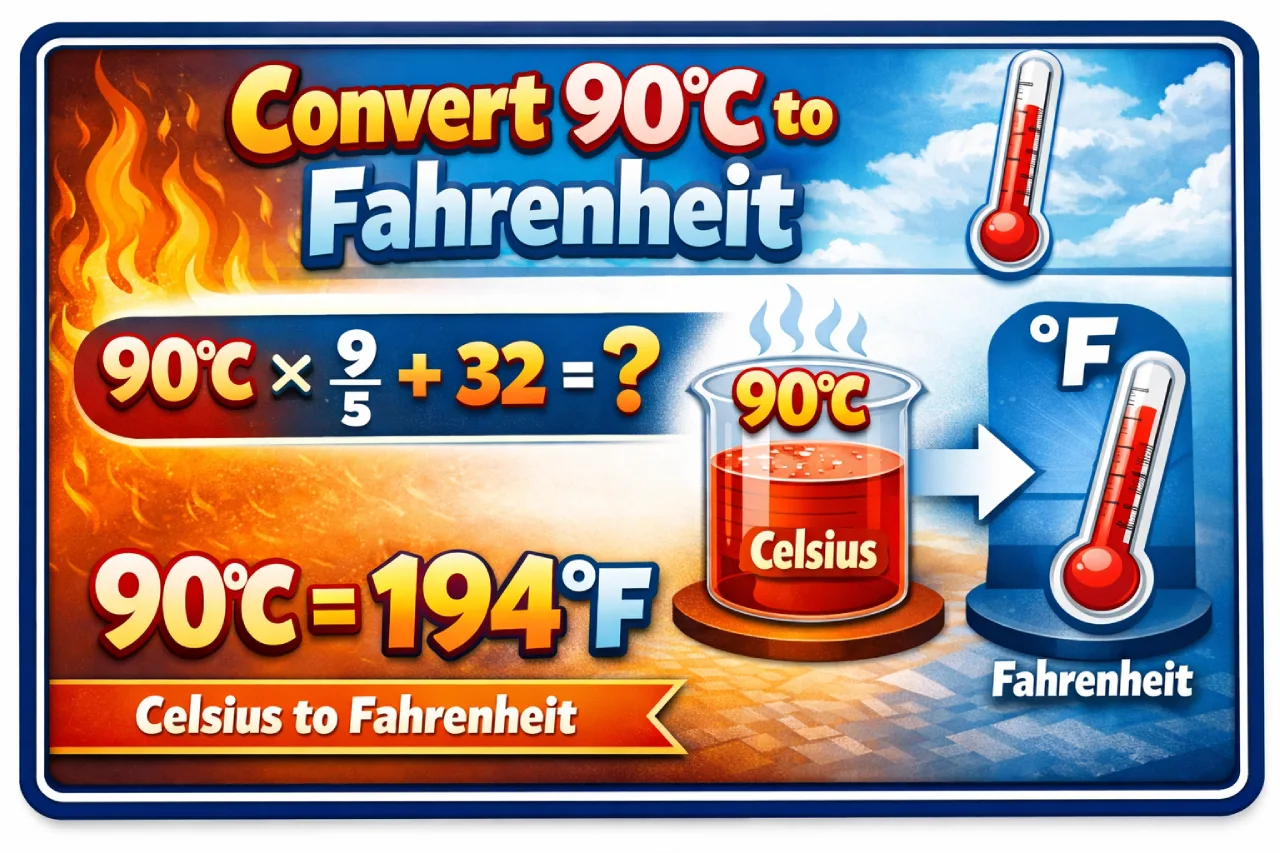
    If you’re looking for the quick answer:

    90°C = 194°F

    So when you convert 90 Celsius to Fahrenheit, the result is 194 degrees Fahrenheit.

    This is a common temperature conversion, especially when dealing with cooking instructions, weather comparisons, scientific data, or international appliances. Since most countries use Celsius, while the United States primarily uses Fahrenheit, knowing how to convert between the two helps you interpret temperatures accurately.

    In this guide, we’ll break down the formula, show the step-by-step calculation, explain what 90°C actually feels like, and provide practical examples so you can confidently use this conversion in real life.

    Understanding Celsius and Fahrenheit

    Before we dive into the calculation, let’s quickly understand the two temperature scales.

    What Is Celsius (°C)?

    The Celsius scale is part of the metric system and is used worldwide.

    It’s based on simple reference points:

    • 0°C = freezing point of water
    • 100°C = boiling point of water

    Because of this logical structure, Celsius is widely used in:

    • Science and education
    • Weather reporting (outside the U.S.)
    • Cooking in many countries
    • Industrial applications

    What Is Fahrenheit (°F)?

    The Fahrenheit scale is primarily used in the United States.

    Its reference points are:

    • 32°F = freezing point of water
    • 212°F = boiling point of water

    Fahrenheit is commonly used for:

    • Weather forecasts in the U.S.
    • Oven temperatures
    • Household thermostats

    Because the scale has smaller increments, it allows for more precise temperature readings in everyday use.

    The Formula: Celsius to Fahrenheit

    Celsius to Fahrenheit Converter

    Celsius to Fahrenheit Converter

    Enter a temperature in Celsius to instantly convert it to Fahrenheit.

    Result will appear here
    Formula: °F = (°C × 9/5) + 32

    The conversion between Celsius and Fahrenheit follows a standard formula:

    Fahrenheit = (Celsius × 9/5) + 32

    This formula works for any temperature.

    Step-by-Step Conversion: 90°C to °F

    Let’s walk through the calculation.

    Step 1: Start with the Celsius value

    90°C

    Step 2: Multiply by 9/5

    90 × 9/5 = 162

    Step 3: Add 32

    162 + 32 = 194

    Final Answer

    90°C = 194°F

    Quick Reference Conversion Table

    Here’s a helpful chart for nearby temperatures.

    Celsius (°C)Fahrenheit (°F)
    50°C122°F
    60°C140°F
    70°C158°F
    80°C176°F
    90°C194°F
    100°C212°F

    This makes it easy to estimate similar values.

    What Does 90°C (194°F) Feel Like?

    Now that we know the number, let’s understand what 90°C actually represents.

    Boiling Point Context

    Water boils at 100°C (212°F), so 90°C is just below boiling.

    This means:

    • The water is extremely hot
    • Steam may be visible
    • It can cause burns instantly

    Cooking Example

    In cooking, 90°C (194°F) is commonly used for:

    • Simmering liquids
    • Brewing coffee or tea
    • Cooking delicate sauces
    • Sous vide preparation

    It’s hot enough to cook food but slightly below full boiling.

    Everyday Comparison

    • Hot tap water can reach 120–140°F
    • 194°F is significantly hotter and dangerous to touch

    Understanding this helps you interpret recipes and safety guidelines.

    Why Convert Celsius to Fahrenheit?

    There are several situations where this conversion becomes useful.

    1. Cooking and Recipes

    Many international recipes use Celsius, while U.S. ovens use Fahrenheit.

    For example:

    • A recipe might say 90°C simmer, which equals 194°F.

    2. Travel and Weather

    If you’re traveling internationally, temperatures may be listed in Celsius.

    3. Science and Education

    Scientific measurements often use Celsius, but U.S. readers may need Fahrenheit.

    4. Appliances and Equipment

    Imported appliances may display temperature in Celsius.

    Celsius vs Fahrenheit: Key Differences

    FeatureCelsiusFahrenheit
    Freezing point of water0°C32°F
    Boiling point of water100°C212°F
    Common useGlobalUnited States
    Scale sizeLarger incrementsSmaller increments

    Because Fahrenheit uses smaller increments, it allows for more detailed temperature readings.

    Converting Fahrenheit Back to Celsius

    If you need to reverse the conversion, use this formula:

    Celsius = (Fahrenheit − 32) × 5/9

    Example

    (194 − 32) × 5/9 = 90°C

    This confirms the earlier result.

    Common Mistakes in Temperature Conversion

    Even simple formulas can cause confusion.

    Forgetting to Add 32

    Always remember the full formula:

    (°C × 9/5) + 32

    Mixing Up Multiplication Factors

    Use 9/5, not 5/9, when converting to Fahrenheit.

    Rounding Too Early

    Wait until the final step before rounding.

    Tips for Quick Mental Conversion

    Here are some helpful shortcuts.

    Trick 1: Double and Add 30

    For a rough estimate:

    (C × 2) + 30

    Example:

    90 × 2 = 180
    180 + 30 = 210°F (estimate)

    The exact value is 194°F, so this method gives a quick approximation.

    Trick 2: Use Benchmarks

    • 0°C = 32°F
    • 50°C = 122°F
    • 100°C = 212°F

    Knowing these helps you estimate quickly.

    Real-World Examples of 90°C

    Coffee Brewing

    Many coffee experts recommend water temperatures between 90°C and 96°C for optimal extraction.

    Cooking Liquids

    Soups and sauces often simmer around this temperature.

    Industrial Use

    Some processes require controlled heating below boiling point.

    Understanding the Fahrenheit equivalent ensures accuracy when working with U.S.-based equipment.

    Frequently Asked Questions (FAQs)

    What is 90°C in Fahrenheit?

    90°C equals 194°F.

    How do you convert Celsius to Fahrenheit?

    Use the formula:

    (°C × 9/5) + 32

    Is 90°C boiling?

    No.
    Boiling occurs at 100°C (212°F).

    What is 90°C used for?

    It’s commonly used for:

    • Simmering
    • Brewing coffee
    • Cooking delicate foods

    Is 194°F very hot?

    Yes. It’s extremely hot and can cause burns quickly.

    What is the easiest way to estimate Celsius to Fahrenheit?

    Multiply by 2 and add 30 for a quick estimate.

    Why does the U.S. use Fahrenheit?

    It’s part of the historical measurement system used in the country.

    How accurate is the formula?

    The formula is exact when used correctly.

    Can calculators convert temperatures automatically?

    Yes. Most calculators and apps include temperature conversion.

    What is 100°C in Fahrenheit?

    100°C = 212°F

    Final Thoughts

    Converting 90 Celsius to Fahrenheit is simple once you understand the formula:

    (°C × 9/5) + 32

    Using this, we find:

    90°C = 194°F

    This temperature is just below boiling, making it especially important in cooking and scientific applications.

    Once you remember the formula and a few key benchmarks, you’ll be able to convert temperatures quickly and confidently.

    Now here’s a quick thought for you:
    The next time you see a temperature in Celsius, will you instantly know its Fahrenheit equivalent—or still reach for a calculator?
  • Convert lbs to kg

    Convert lbs to kg

    If you’re looking for the quick answer:

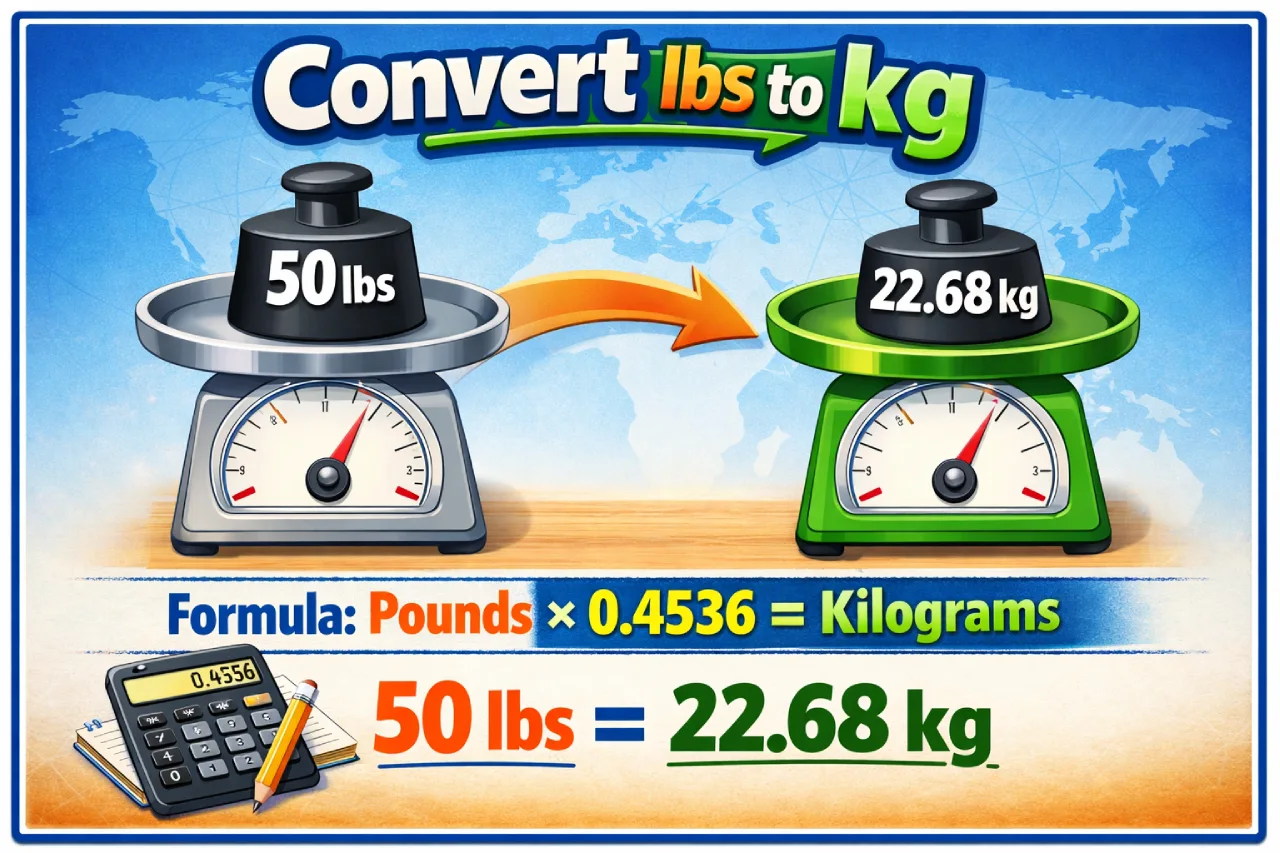
    1 pound (lb) = 0.453592 kilograms (kg)

    So, to convert lbs to kg, you simply multiply the number of pounds by 0.453592.

    For example:

    • 100 lbs = 45.36 kg
    • 150 lbs = 68.04 kg
    • 200 lbs = 90.72 kg

    This conversion is one of the most commonly used in everyday life—especially when comparing body weight, fitness goals, shipping weights, and international measurements.

    If you want a practical example of this conversion in action, you can check this detailed guide on 209 lbs to kg where the full calculation and real-world context are explained.

    In this guide, we’ll break down everything you need to know about converting pounds to kilograms, including formulas, examples, real-world applications, and easy tricks to do it quickly without a calculator.

    lbs to kg Conversion Formula

    Lbs to Kg Converter

    Lbs to Kg Converter

    Enter a weight in pounds to instantly convert it into kilograms.

    Result: —
    Formula: 1 lb = 0.45359237 kg

    The conversion between pounds and kilograms is based on a fixed relationship:

    1 lb = 0.453592 kg

    Main Formula

    kg = lbs × 0.453592

    This formula works for any value you want to convert.

    Step-by-Step Example

    Let’s convert 150 lbs to kg.

    Step 1: Start with pounds

    150 lbs

    Step 2: Multiply by conversion factor

    150 × 0.453592

    Step 3: Calculate

    = 68.0388 kg

    Final Answer

    150 lbs ≈ 68.04 kg

    Quick lbs to kg Conversion Table

    Here’s a handy reference for common weights.

    Pounds (lbs)Kilograms (kg)
    100 lbs45.36 kg
    120 lbs54.43 kg
    150 lbs68.04 kg
    180 lbs81.65 kg
    200 lbs90.72 kg
    209 lbs94.80 kg
    220 lbs99.79 kg
    250 lbs113.40 kg

    As shown above, 209 lbs equals approximately 94.8 kg, which aligns with standard conversion calculations.

    Why Convert lbs to kg?

    There are many situations where converting pounds to kilograms becomes important.

    1. International Travel

    Most countries use kilograms for luggage limits.

    2. Health and Fitness

    Medical and fitness systems worldwide use kilograms.

    3. Scientific and Academic Use

    The metric system is standard globally.

    4. Shipping and Logistics

    International shipping weights are listed in kilograms.

    lbs vs kg: Key Differences

    UnitSystemEquivalent
    Pound (lb)U.S. customary0.453592 kg
    Kilogram (kg)Metric system2.20462 lbs

    Kilograms produce smaller numbers for the same weight.

    Converting kg Back to lbs

    Formula

    lbs = kg × 2.20462

    Example

    70 kg × 2.20462 ≈ 154.32 lbs

    Easy Mental Conversion Tricks

    Trick 1: Divide by 2.2

    lbs ÷ 2.2 ≈ kg

    Example:

    220 ÷ 2.2 ≈ 100 kg

    Trick 2: Multiply by 0.45

    lbs × 0.45 ≈ kg

    Example:

    150 × 0.45 ≈ 67.5 kg

    Trick 3: Memorize Benchmarks

    • 100 lbs ≈ 45 kg
    • 150 lbs ≈ 68 kg
    • 200 lbs ≈ 91 kg

    Real-World Examples

    Body Weight

    180 lbs ≈ 81.65 kg

    Gym Equipment

    45 lb plate ≈ 20.4 kg

    Shipping

    50 lbs ≈ 22.7 kg

    Common Mistakes to Avoid

    • Using incorrect conversion factors
    • Rounding too early
    • Mixing units incorrectly

    Frequently Asked Questions (FAQs)

    How do you convert lbs to kg?

    Multiply pounds by 0.453592.

    What is 1 lb in kg?

    1 lb = 0.453592 kg

    What is the easiest way to convert lbs to kg?

    Divide by 2.2.

    What is 209 lbs in kg?

    209 lbs ≈ 94.8 kg

    How many lbs are in 1 kg?

    1 kg ≈ 2.20462 lbs

    Final Thoughts

    Converting lbs to kg is simple once you understand the relationship between the two units.

    The key rule:

    1 lb = 0.453592 kg

    With this, you can quickly convert any weight and understand measurements across different systems.

    Here’s a quick thought for you:
    Next time you see your weight in pounds, can you instantly estimate it in kilograms?

  • 209 lbs to kg

    209 lbs to kg

    If you’re looking for the quick answer:

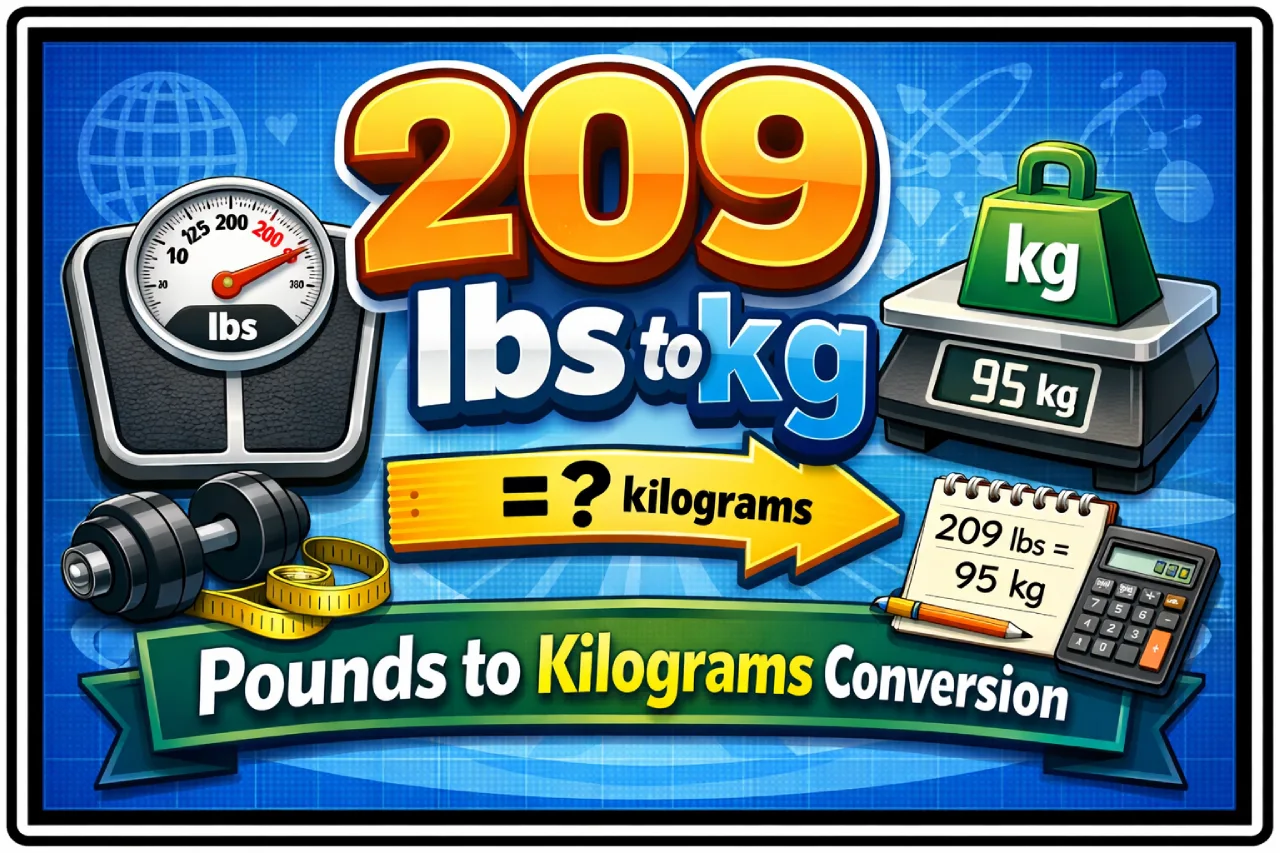
    209 pounds (lbs) = 94.80 kilograms (kg) (approximately).

    So, when you convert 209 lbs to kg, the result is about 94.8 kg when rounded to one decimal place.

    This conversion is especially useful because the United States uses pounds, while most of the world—including Europe, Asia, and scientific communities—uses kilograms. Whether you’re tracking body weight, reading international fitness data, or comparing measurements globally, understanding this conversion makes things much easier.

    In this guide, we’ll walk through the exact formula, step-by-step calculation, practical examples, and tips to help you convert pounds to kilograms quickly and confidently.

    Understanding Pounds and Kilograms

    Before diving into the math, it helps to understand what these units actually represent.

    What Is a Pound (lb)?

    A pound (lb) is a unit of weight in the U.S. customary system. It’s widely used in the United States for:

    • Body weight
    • Food measurements
    • Shipping and packages
    • Gym and fitness tracking

    For example:

    • A person might weigh 150–200 lbs
    • A bag of flour might weigh 5 lbs
    • Gym weights are often labeled in pounds

    The pound is part of a larger system that includes ounces and tons.

    What Is a Kilogram (kg)?

    A kilogram (kg) is the base unit of mass in the metric system, also known as the International System of Units (SI).

    Kilograms are used globally for:

    • Body weight
    • Scientific measurements
    • Medical records
    • International trade

    For example:

    • A person might weigh 70–100 kg
    • A suitcase may weigh 20 kg
    • Grocery items are often sold in kilograms

    Because kilograms are part of the metric system, they are the global standard.

    The Formula to Convert Pounds to Kilograms

    Lbs to Kg Converter

    Lbs to Kg Converter

    Enter a weight in pounds to instantly convert it into kilograms.

    Result: —
    Formula: 1 lb = 0.45359237 kg

    The conversion between pounds and kilograms is based on a fixed relationship:

    1 pound = 0.453592 kilograms

    Conversion Formula

    Kilograms = Pounds × 0.453592

    This formula allows you to convert any weight from pounds to kilograms.

    Step-by-Step Conversion: 209 lbs to kg

    Let’s break it down clearly.

    Step 1: Start with the value in pounds

    209 lbs

    Step 2: Multiply by the conversion factor

    209 × 0.453592

    Step 3: Perform the calculation

    = 94.8007 kg

    Final Result

    209 lbs = 94.80 kg (rounded)

    Quick Pounds-to-Kilograms Conversion Table

    Here’s a helpful table for nearby values.

    Pounds (lbs)Kilograms (kg)
    180 lbs81.65 kg
    190 lbs86.18 kg
    200 lbs90.72 kg
    209 lbs94.80 kg
    210 lbs95.25 kg
    220 lbs99.79 kg

    This makes it easier to estimate similar conversions quickly.

    Visualizing 209 lbs (94.8 kg)

    Numbers become easier to understand when compared to real-world contexts.

    Body Weight Perspective

    A weight of 209 lbs (94.8 kg) is:

    • Above the average adult weight in many countries
    • Common for athletes, especially in strength sports
    • Within a typical range for taller individuals

    Fitness Context

    In the gym, 209 lbs might represent:

    • A barbell loaded for moderate-to-heavy lifting
    • A personal body weight goal or milestone
    • A benchmark for strength training progress

    Everyday Comparison

    • A large adult dog can weigh around 90–100 lbs
    • Two large suitcases combined may approach this weight

    These comparisons help make the number more relatable.

    Why Convert Pounds to Kilograms?

    There are many practical reasons for converting between these units.

    International Travel

    Most countries use kilograms for body weight and luggage limits.

    Health and Fitness

    Medical records and global fitness programs often use kilograms.

    Scientific and Academic Use

    The metric system is standard in science and research.

    Online Shopping and Shipping

    International shipping weights are often listed in kilograms.

    Pounds vs Kilograms: Key Differences

    Although both units measure weight, they belong to different systems.

    UnitMeasurement SystemEquivalent
    Pound (lb)U.S. customary0.453592 kg
    Kilogram (kg)Metric system2.20462 lbs

    Because kilograms are larger units, values in kg are usually smaller numbers than pounds.

    Converting Kilograms Back to Pounds

    Sometimes you need to reverse the conversion.

    Formula

    Pounds = Kilograms × 2.20462

    Example

    94.8 × 2.20462 ≈ 209 lbs

    This confirms the original conversion.

    Common Mistakes When Converting lbs to kg

    Even simple conversions can go wrong if you’re not careful.

    Using the Wrong Conversion Factor

    Always use:

    1 lb = 0.453592 kg

    Rounding Too Early

    Rounding before finishing the calculation can affect accuracy.

    Confusing Pounds with Kilograms

    Remember:

    • Pounds are larger numbers
    • Kilograms are smaller numbers for the same weight

    Tips for Quick Mental Conversion

    Here are a few shortcuts.

    First, remember the approximate rule:

    1 lb ≈ 0.45 kg

    Second, divide pounds by 2.2 for a quick estimate.

    Example:

    209 ÷ 2.2 ≈ 95 kg

    This is very close to the exact value of 94.8 kg.

    Third, remember key benchmarks:

    • 100 lbs ≈ 45 kg
    • 200 lbs ≈ 91 kg

    These help estimate quickly without a calculator.

    Real-World Examples of 209 lbs

    Athlete Weight

    Many athletes in sports like football or weightlifting fall in the 200–220 lb range.

    Fitness Goals

    Someone tracking weight loss or muscle gain may aim to reach or maintain around 209 lbs.

    Shipping and Freight

    Large packages or equipment may weigh around this amount.

    Understanding the kilogram equivalent makes it easier to compare internationally.

    Frequently Asked Questions (FAQs)

    How many kilograms is 209 lbs?

    209 lbs equals approximately 94.8 kg.

    How do you convert pounds to kilograms?

    Multiply pounds by 0.453592.

    Is 209 lbs a heavy weight?

    It depends on height and body composition, but it is above average for most adults.

    What is 209 lbs in kg rounded?

    95 kg (rounded to the nearest whole number).

    How many pounds are in 1 kg?

    1 kg ≈ 2.20462 lbs

    Why do most countries use kilograms?

    Because the metric system is the global standard.

    What is the easiest way to convert lbs to kg?

    Divide pounds by 2.2 for a quick estimate.

    Is 209 lbs equal to 100 kg?

    No.
    209 lbs ≈ 94.8 kg, which is less than 100 kg.

    Can calculators convert lbs to kg automatically?

    Yes. Most calculators and apps support unit conversions.

    What is 200 lbs in kg?

    200 lbs ≈ 90.72 kg

    Final Thoughts

    Converting 209 lbs to kg is simple once you understand the relationship between pounds and kilograms.

    Using the formula lbs × 0.453592, we find:

    209 lbs = approximately 94.8 kg.

    This conversion is useful in everyday life—from tracking fitness goals to understanding international measurements.

    Once you remember the simple rule—divide by 2.2 or multiply by 0.45—you’ll be able to estimate conversions quickly and confidently.

    Now here’s a simple question for you:
    When you see a weight like 209 lbs, can you instantly picture it in kilograms—or do you still need to convert it?

  • 66.1 Inches Into Feet (Exact Conversion Explained)

    66.1 Inches Into Feet (Exact Conversion Explained)

    If you want the quick answer:

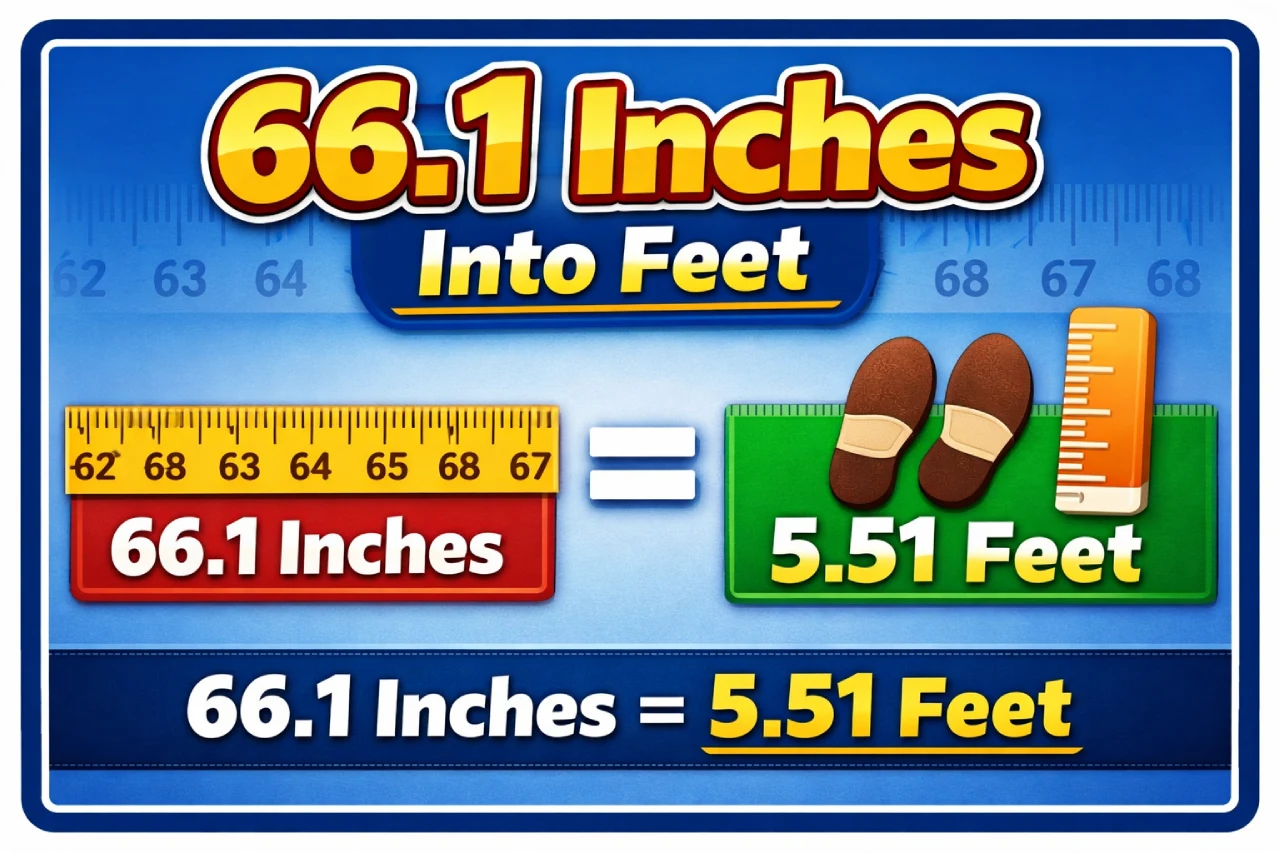
    66.1 inches = 5.508 feet (approximately).
    In feet-and-inches format, that equals 5 feet 6.1 inches.

    This conversion is something you’ll see all the time in the United States—especially when dealing with height measurements, furniture dimensions, interior layouts, and construction plans. While inches provide precision, feet make it easier to visualize larger measurements.

    In this guide, we’ll break down exactly how to convert 66.1 inches into feet, explain the formula step by step, and show practical examples so you can understand and apply this conversion confidently.

    If you’re working with similar measurements, you can also check this detailed guide on 65.5 inches to feet conversion to better understand how inch-to-foot conversions work across different values.

    The Formula to Convert Inches to Feet

    Inches Into Feet Converter

    Inches Into Feet Converter

    Enter inches below to instantly convert them into feet.

    Result will appear here
    1 foot = 12 inches

    The formula is straightforward:

    Feet = Inches ÷ 12

    This works because there are 12 inches in one foot.

    Applying the Formula

    To convert 66.1 inches into feet:

    66.1 ÷ 12 = 5.5083 feet

    Rounded:

    66.1 inches ≈ 5.508 feet

    Step-by-Step Conversion

    Let’s break it down clearly.

    Step 1: Start with the value in inches

    66.1 inches

    Step 2: Divide by 12

    66.1 ÷ 12

    Step 3: Calculate the result

    = 5.5083 feet

    Final Answer

    66.1 inches equals approximately 5.51 feet.

    Converting 66.1 Inches to Feet and Inches

    In everyday use—especially for height—we don’t usually say “5.508 feet.” Instead, we convert the decimal into inches.

    Step 1: Take the whole number of feet

    66.1 ÷ 12 = 5 feet

    Step 2: Find the remaining inches

    5 × 12 = 60 inches
    66.1 − 60 = 6.1 inches

    Final Result

    66.1 inches = 5 feet 6.1 inches

    Visualizing 66.1 Inches

    Numbers become much clearer when we compare them with real-world objects.

    Human Height

    A height of 66.1 inches (5′6.1″) is close to the average adult height in the U.S.

    Furniture

    Many cabinets, wardrobes, or shelving units are around 65–70 inches tall, making this a familiar size in home design.

    Interior Design

    Wall-mounted items like mirrors or artwork are often placed around 60–66 inches from the floor, which is very close to this measurement.

    Quick Inches-to-Feet Conversion Table

    Here’s a helpful reference chart.

    InchesFeet
    60 in5 ft
    64 in5.33 ft
    66 in5.5 ft
    66.1 in5.51 ft
    68 in5.67 ft
    70 in5.83 ft
    72 in6 ft

    Why Convert Inches to Feet?

    Although inches are precise, feet are more practical for understanding larger measurements.

    Height Measurements

    In the U.S., height is typically expressed in feet and inches.

    For example:

    • 60 inches = 5′0″
    • 66 inches = 5′6″
    • 72 inches = 6′0″

    So 66.1 inches naturally becomes 5′6.1″.

    Construction and Carpentry

    Builders often use inches for detail but convert to feet for overall dimensions.

    Interior Design

    Room sizes, furniture placement, and layouts are usually described in feet.

    Decimal Feet vs Feet-and-Inches Format

    There are two ways to express the same measurement.

    Decimal Feet

    66.1 inches = 5.508 feet

    Used in:

    • Engineering
    • Surveying
    • Construction calculations

    Feet and Inches

    66.1 inches = 5 ft 6.1 in

    Used in:

    • Everyday conversation
    • Height measurements
    • Furniture sizing

    Converting Feet Back to Inches

    Sometimes you’ll need to reverse the conversion.

    The formula is:

    Inches = Feet × 12

    Example

    5.508 × 12 ≈ 66.1 inches

    Common Mistakes When Converting Inches to Feet

    Dividing by 10 Instead of 12

    Always divide by 12, not 10.

    Misreading Decimal Feet

    For example:

    5.5 feet does not mean 5 feet 5 inches.
    It actually means 5 feet 6 inches.

    Rounding Too Early

    Always round at the final step for better accuracy.

    Tips for Quick Mental Conversion

    • Remember: 12 inches = 1 foot
    • 60 inches = 5 feet
    • 72 inches = 6 feet

    These benchmarks help estimate quickly.

    Frequently Asked Questions (FAQs)

    How many feet is 66.1 inches?

    66.1 inches equals approximately 5.508 feet.

    What is 66.1 inches in feet and inches?

    5 feet 6.1 inches.

    How do you convert inches to feet?

    Divide inches by 12.

    Is 66.1 inches close to 6 feet?

    No, it’s closer to 5.5 feet.

    How many inches are in 5 feet?

    60 inches

    What is the formula for inches to feet?

    Feet = Inches ÷ 12

    Final Thoughts

    Converting 66.1 inches into feet is simple once you understand the relationship between these units.

    Using the formula inches ÷ 12, we get:

    66.1 inches ≈ 5.51 feet, or 5 feet 6.1 inches.

    Whether you’re measuring height, planning furniture, or working on a DIY project, this conversion helps you interpret measurements more naturally.

    Now here’s a simple question for you:
    When you see a number like 66.1 inches, do you instantly picture it in feet—or do you still reach for a calculator?

  • Pint vs Quart: What’s the Difference?

    Pint vs Quart: What’s the Difference?

    If you want the quick answer first:

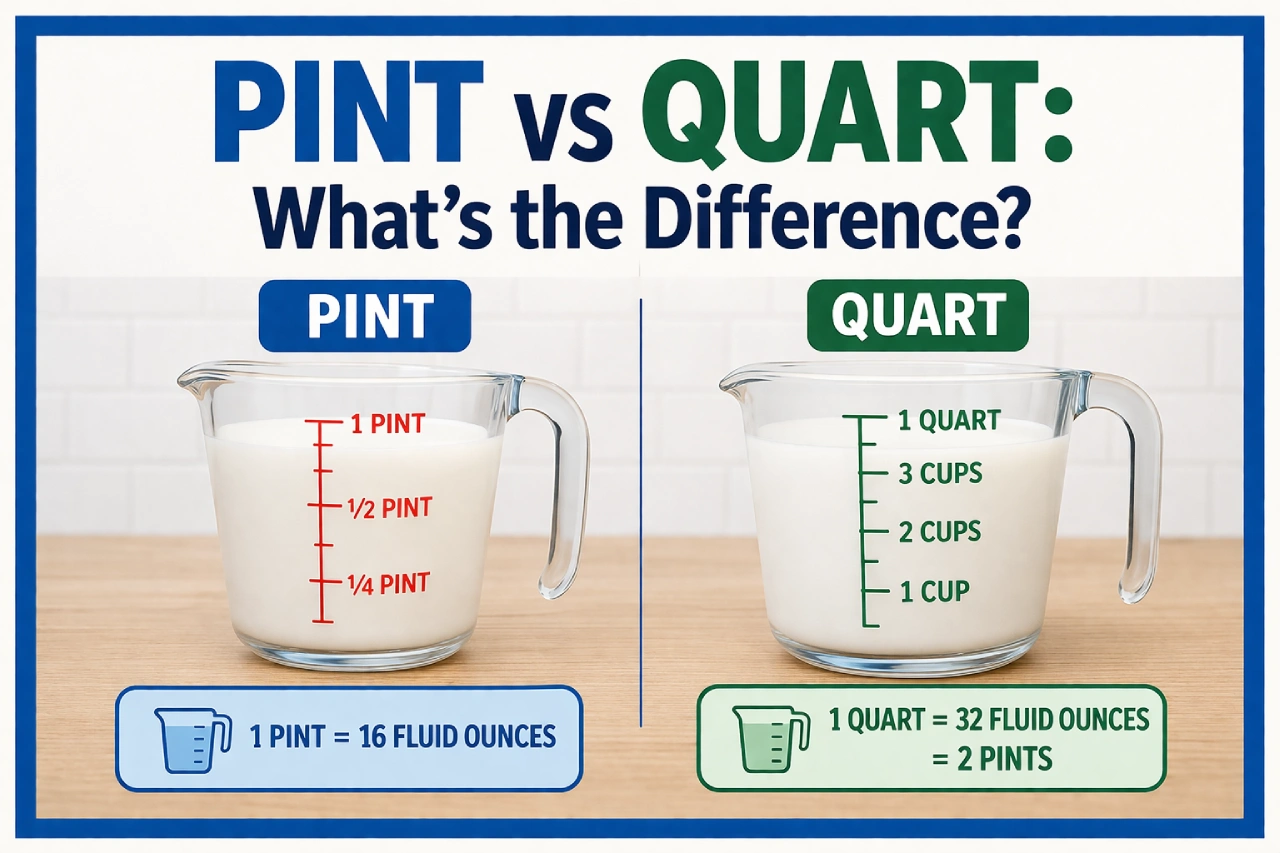
    1 quart = 2 pints.

    That means a quart is exactly twice the size of a pint. Both units are used to measure liquid and dry volume in the U.S. customary measurement system, and they appear frequently in cooking, grocery packaging, and beverage servings.

    For example:

    • A container labeled 1 quart holds 2 pints.
    • A pint of ice cream is half the size of a quart of ice cream.
    • Many soups and liquids are sold in quart containers.

    Although the relationship between the two units is simple, people often confuse them when measuring ingredients or interpreting recipes.

    In this guide, we’ll explain the difference between pints and quarts, show how they convert, explore their use in cooking and food packaging, and clarify how these measurements fit into the larger U.S. volume system.

    What Is a Pint?

    A pint (pt) is a unit of volume used in the U.S. customary system. It is commonly used to measure liquids and sometimes dry ingredients.

    In the United States:

    1 pint = 16 fluid ounces

    Pints are frequently used for:

    • Ice cream containers
    • Milk and cream cartons
    • Berries and small produce containers
    • Beer servings
    • Liquid ingredients in cooking

    For example:

    • A typical ice cream container might hold 1 pint.
    • Fresh strawberries at the grocery store are often sold by the pint.
    • Craft beers are often served in pint glasses.

    Because pints are relatively small, they are useful for measuring moderate quantities of liquid or food.

    What Is a Quart?

    A quart (qt) is another unit of volume in the U.S. customary measurement system.

    In the United States:

    1 quart = 32 fluid ounces

    Since a pint equals 16 ounces, a quart naturally equals two pints.

    Quarts are commonly used for measuring:

    • Milk cartons
    • Soup containers
    • Cooking ingredients
    • Oil and other liquids
    • Large beverage containers

    For example:

    • Many milk cartons are sold in quart sizes.
    • Homemade soup is often stored in quart containers.
    • A quart jar is a common size for canning food.

    Because quarts hold more liquid than pints, they are typically used for larger quantities.

    The Basic Relationship: Pint vs Quart

    Pint vs Quart Converter

    Pint vs Quart Converter

    Convert pints to quarts or quarts to pints instantly with this simple volume converter.

    Your result will appear here.
    1 quart = 2 pints
    1 pint = 0.5 quart

    The most important relationship between these units is simple:

    1 quart = 2 pints

    This means:

    • 1 pint = 0.5 quart
    • 2 pints = 1 quart

    This conversion is widely used in cooking and food preparation.

    Example

    If a recipe requires 1 quart of milk, you can use:

    2 pints of milk

    Both measurements represent the same volume.

    Pint vs Quart Conversion Table

    Here’s a quick reference chart.

    MeasurementEquivalent
    1 pint16 fluid ounces
    2 pints1 quart
    1 quart32 fluid ounces
    4 quarts1 gallon

    This hierarchy helps visualize how the units fit together.

    Where Pints and Quarts Fit in the U.S. Volume System

    Pints and quarts are part of a larger system of measurements.

    The hierarchy looks like this:

    • 1 cup = 8 fluid ounces
    • 2 cups = 1 pint
    • 2 pints = 1 quart
    • 4 quarts = 1 gallon

    Understanding this structure makes conversions much easier.

    Example Conversion

    If you have 1 gallon of milk, that equals:

    • 4 quarts
    • 8 pints

    This relationship is especially useful in cooking and grocery shopping.

    Pint vs Quart in Cooking

    In cooking, recipes often use both pints and quarts depending on the quantity needed.

    When Pints Are Used

    Pints are commonly used for smaller amounts of liquid.

    Examples include:

    • Cream
    • Berries
    • Ice cream
    • Small soup portions

    A recipe might say:

    “Add 1 pint of heavy cream.”

    When Quarts Are Used

    Quarts are used for larger quantities.

    Examples include:

    • Soup
    • Broth
    • Milk
    • Stock

    For example:

    “Simmer the ingredients in 1 quart of chicken broth.”

    Using the appropriate unit makes recipes easier to follow.

    Pint vs Quart in Food Packaging

    Many food products are sold using these measurements.

    Pint Containers

    Common pint-sized items include:

    • Ice cream
    • Fresh berries
    • Sour cream
    • Heavy cream

    These containers typically hold 16 ounces.

    Quart Containers

    Quart-sized items include:

    • Milk
    • Yogurt
    • Soup
    • Cooking oil

    These containers hold 32 ounces.

    Recognizing the difference helps shoppers compare product sizes.

    Liquid vs Dry Pints and Quarts

    One important detail is that the U.S. measurement system distinguishes between liquid and dry measurements.

    Liquid Pint

    A U.S. liquid pint equals:

    16 fluid ounces

    Dry Pint

    A dry pint is slightly different because it measures volume for dry goods such as berries.

    For example:

    A pint of blueberries may not weigh the same as a pint of liquid.

    Similarly, dry quarts can differ slightly from liquid quarts.

    For cooking and beverages, however, people usually mean liquid measurements.

    Pint vs Quart in the United States vs the United Kingdom

    Another point of confusion is that pints differ between countries.

    U.S. Pint

    1 U.S. pint = 16 fluid ounces

    UK Pint

    1 UK pint = 20 fluid ounces

    This means a UK pint is larger than a U.S. pint.

    However, the quart measurement is used primarily in the United States, while the UK often uses liters.

    Real-World Examples of Pint vs Quart

    Let’s look at practical situations where these units appear.

    Ice Cream

    Ice cream often comes in pint containers, which hold about 16 ounces.

    A quart of ice cream would hold twice that amount.

    Milk

    Milk may be sold in several sizes:

    • Pint
    • Quart
    • Half gallon
    • Gallon

    A quart of milk equals two pint containers.

    Soup Storage

    When cooking soup, many people store leftovers in quart containers, which hold about 32 ounces.

    This size is ideal for a single large serving or two smaller servings.

    Why Understanding the Difference Matters

    Knowing the difference between pints and quarts helps avoid mistakes in:

    Cooking

    Using the wrong measurement can affect the balance of ingredients.

    Grocery Shopping

    Understanding container sizes helps compare product value.

    Food Storage

    Choosing the right container prevents spills and waste.

    Simple conversions make everyday tasks easier.

    Tips for Remembering Pint vs Quart

    Here are a few helpful tricks.

    First, remember the rhyme:

    “Two pints make a quart.”

    Second, remember the fluid ounces:

    • Pint = 16 oz
    • Quart = 32 oz

    Third, think of doubling:

    A quart simply doubles a pint.

    These shortcuts help recall the conversion instantly.

    Frequently Asked Questions (FAQs)

    Is a quart bigger than a pint?

    Yes.
    1 quart equals 2 pints, so a quart is twice as large.

    How many pints are in a quart?

    2 pints = 1 quart

    How many ounces are in a pint?

    A U.S. pint equals 16 fluid ounces.

    How many ounces are in a quart?

    A quart equals 32 fluid ounces.

    How many quarts are in a gallon?

    4 quarts = 1 gallon

    Is a pint always the same size worldwide?

    No. The UK pint is larger than the U.S. pint.

    What is a pint used for?

    Pints are commonly used for ice cream, berries, and beverages.

    What is a quart used for?

    Quarts are often used for milk, soups, and larger liquid quantities.

    How many cups are in a pint?

    2 cups = 1 pint

    How many cups are in a quart?

    4 cups = 1 quart

    Final Thoughts

    The difference between pints and quarts is simple once you understand the relationship between the two units.

    The key rule to remember is:

    1 quart = 2 pints

    This means a quart always holds twice as much volume as a pint.

    Both measurements play an important role in cooking, food packaging, and everyday household tasks.

    Once you remember the basic hierarchy—cups, pints, quarts, and gallons—you’ll be able to convert between these units quickly and confidently.

    And the next time you see a recipe calling for a quart of broth or a pint of cream, you’ll instantly know how those measurements compare.

  • 65.5 Inches to Feet Conversion (Exact Answer Explained)

    65.5 Inches to Feet Conversion (Exact Answer Explained)

    If you’re looking for the quick answer:

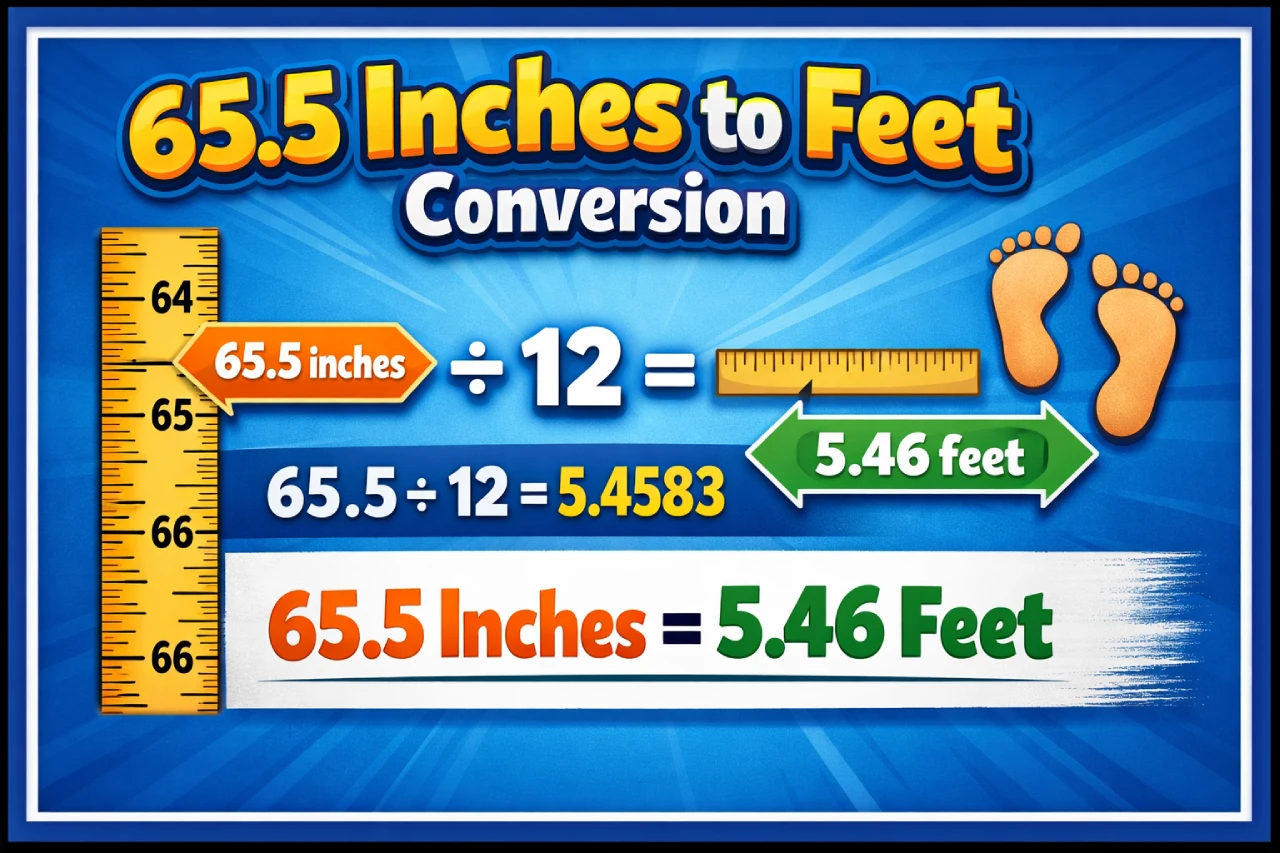
    65.5 inches = 5.458 feet (approximately).
    When expressed in feet and inches, this equals 5 feet 5.5 inches.

    This type of conversion appears frequently in everyday situations—especially when measuring human height, furniture dimensions, construction materials, and interior design layouts. In the United States, measurements are often recorded in inches, but people commonly visualize them in feet and inches.

    Understanding how to convert inches into feet helps you interpret measurements quickly and avoid confusion when reading specifications.

    In this guide, we’ll explain how to convert 65.5 inches into feet, show the exact formula behind the conversion, walk through step-by-step calculations, and explore practical examples where this measurement might appear.

    The Formula for Converting Inches to Feet

    Inches to Feet Converter

    Inches to Feet Converter

    Enter a value in inches to instantly convert it into feet.

    Formula: Feet = Inches ÷ 12

    The conversion formula is straightforward:

    Feet = Inches ÷ 12

    This works because there are 12 inches in one foot.

    Applying the Formula

    To convert 65.5 inches into feet, divide by 12:

    65.5 ÷ 12 = 5.4583 feet

    Rounded to three decimal places:

    65.5 inches ≈ 5.458 feet

    Converting 65.5 Inches to Feet and Inches

    In everyday situations, people often describe height using feet and inches, rather than decimal feet.

    Let’s convert 65.5 inches into that format.

    Step 1: Divide by 12

    65.5 ÷ 12 = 5 feet with a remainder.

    Step 2: Calculate Remaining Inches

    5 × 12 = 60 inches

    65.5 − 60 = 5.5 inches

    Final Result

    65.5 inches = 5 feet 5.5 inches

    This format is commonly used when describing height.

    Visualizing 65.5 Inches

    Numbers become easier to understand when compared with familiar objects.

    Human Height

    A height of 65.5 inches (5′5.5″) is close to the average height of adult women in the United States.

    Furniture Dimensions

    A cabinet or tall bookshelf might measure around 65–70 inches tall, which is similar to this measurement.

    Door Handles

    Door handles are typically placed around 36 inches above the floor, so 65.5 inches would be significantly taller than that point.

    Understanding these comparisons makes it easier to visualize the measurement.

    Quick Inches-to-Feet Conversion Table

    Here’s a reference chart for nearby measurements.

    InchesFeet
    60 in5 ft
    63 in5.25 ft
    65 in5.42 ft
    65.5 in5.46 ft
    66 in5.5 ft
    70 in5.83 ft
    72 in6 ft

    Tables like this help estimate conversions quickly.

    Why Convert Inches to Feet?

    Although inches provide precise measurements, feet often make larger measurements easier to understand.

    Height Measurements

    In the United States, height is typically expressed in feet and inches.

    For example:

    • 60 inches = 5′0″
    • 65 inches = 5′5″
    • 72 inches = 6′0″

    So 65.5 inches is commonly described as 5′5.5″.

    Construction and Carpentry

    Builders often work with inches in detailed plans but convert those measurements into feet when estimating larger structures.

    Interior Design

    Furniture and room dimensions are often described in feet even when precise measurements are recorded in inches.

    Understanding these conversions helps ensure accurate planning.

    Decimal Feet vs Feet-and-Inches Format

    There are two common ways to express measurements.

    Decimal Feet

    65.5 inches = 5.458 feet

    This format is commonly used in:

    • Engineering calculations
    • Surveying measurements
    • Construction plans

    Feet and Inches

    65.5 inches = 5 ft 5.5 in

    This format is more common in everyday conversation.

    For example:

    • Height descriptions
    • Furniture measurements
    • Household items

    Both formats represent the same measurement but are used in different contexts.

    Converting Feet Back to Inches

    Sometimes the reverse conversion is needed.

    The formula is:

    Inches = Feet × 12

    Example

    5.458 × 12 ≈ 65.5 inches

    This confirms the earlier conversion.

    Inches vs Feet vs Yards

    The U.S. customary system includes several units of length.

    UnitEquivalent
    1 foot12 inches
    1 yard3 feet
    1 yard36 inches

    Using these relationships makes it easier to convert between units.

    For example:

    65.5 inches equals:

    • 5.458 feet
    • 1.82 yards

    Common Mistakes When Converting Inches to Feet

    Even simple conversions can lead to confusion.

    Dividing by the Wrong Number

    Always divide inches by 12, not 10.

    Misinterpreting Decimal Feet

    For example:

    5.5 feet does not mean 5 feet 5 inches.

    Instead:

    0.5 feet = 6 inches

    Understanding this distinction prevents calculation errors.

    Rounding Too Early

    Rounding during intermediate steps can slightly affect the final result.

    It’s best to round only after finishing the calculation.

    Tips for Quick Mental Conversion

    Here are a few tricks for estimating conversions.

    First, remember the key rule:

    12 inches = 1 foot

    Second, estimate the nearest multiple of 12.

    For example:

    60 inches = 5 feet

    Then add the remaining inches.

    Third, remember common heights:

    • 64 inches ≈ 5′4″
    • 66 inches ≈ 5′6″
    • 72 inches ≈ 6′0″

    These benchmarks make mental conversions easier.

    Real-World Examples of 65.5 Inches

    Athlete Heights

    Some athletes measure around 65–66 inches tall, which is close to this measurement.

    Furniture Design

    A tall cabinet or bookshelf might measure about 65 inches high.

    Interior Layouts

    Wall art or shelving installations might be placed around 65 inches above the floor for optimal viewing height.

    Understanding the foot equivalent helps when planning layouts.

    Frequently Asked Questions (FAQs)

    How many feet is 65.5 inches?

    65.5 inches equals approximately 5.458 feet.

    What is 65.5 inches in feet and inches?

    5 feet 5.5 inches.

    How do you convert inches to feet?

    Divide the number of inches by 12.

    Is 65.5 inches tall for a person?

    Yes. It equals about 5′5.5″, which is close to average adult height.

    How many inches are in 5 feet?

    5 × 12 = 60 inches.

    What is the formula for inches to feet?

    Feet = Inches ÷ 12

    How many yards is 65.5 inches?

    65.5 ÷ 36 ≈ 1.82 yards.

    Why convert inches to feet?

    Feet provide an easier way to understand larger measurements.

    Can calculators convert inches to feet automatically?

    Yes. Most calculators and measurement apps include built-in unit conversion tools.

    What is the easiest way to estimate inches to feet?

    Divide the number of inches by 12.

    Final Thoughts

    Converting 65.5 inches to feet is simple once you understand the relationship between inches and feet.

    Using the formula inches ÷ 12, we find that:

    65.5 inches equals approximately 5.46 feet, or 5 feet 5.5 inches.

    Understanding this conversion helps when interpreting height measurements, planning furniture placement, or working with construction dimensions.

    Once you remember the simple rule—12 inches equals one foot—you can convert between these units quickly and confidently.

    And the next time you see a measurement like 65.5 inches, you’ll immediately recognize that it’s just over five and a half feet tall.

  • 1 Tum Till mm (Inch to Millimeters Conversion)

    1 Tum Till mm (Inch to Millimeters Conversion)

    If you’re searching for the quick answer:

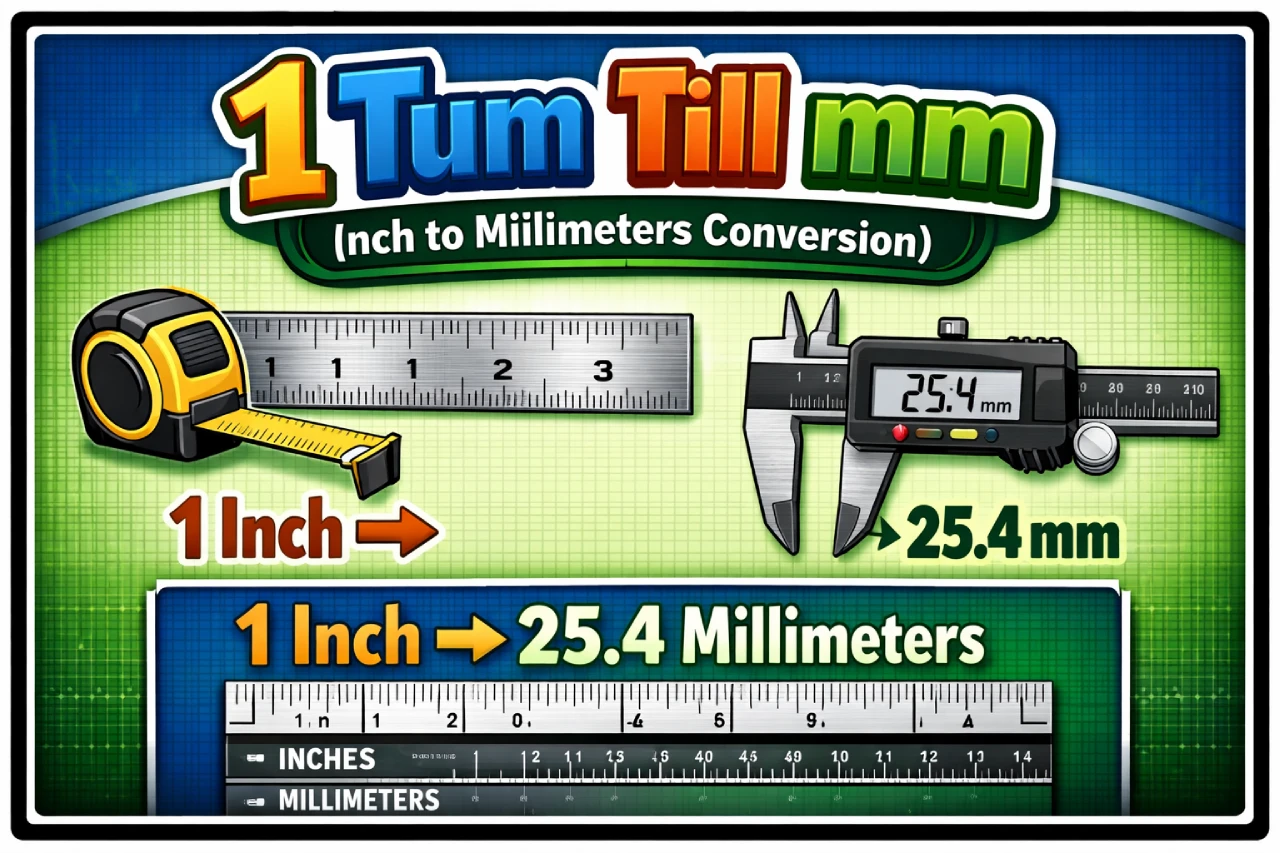
    1 tum = 25.4 mm

    In Swedish, the word “tum” means inch, so the phrase “1 tum till mm” simply means converting 1 inch to millimeters.

    This conversion is extremely common when measurements move between the imperial system (inches)—commonly used in the United States—and the metric system (millimeters), which is used in most other parts of the world.

    For example, product dimensions, engineering drawings, screen sizes, and mechanical parts are often listed in inches, but international specifications may require measurements in millimeters.

    In this guide, we’ll explain exactly how the conversion works, why 1 inch equals 25.4 millimeters, and how to convert inches to millimeters quickly and accurately in real-world situations.

    Understanding the Term “Tum”

    The term “tum” is used in several European languages, including Swedish and sometimes German, to represent an inch.

    Historically, the word comes from the idea of measuring using the width of a thumb, which was roughly equivalent to the length of an inch.

    Although modern measurement systems are standardized, the word “tum” still appears in measurement contexts such as:

    • Construction measurements
    • Hardware dimensions
    • Plumbing and piping specifications
    • Screen sizes
    • Tool measurements

    When someone asks for “1 tum till mm”, they’re simply asking:

    How many millimeters are in 1 inch?

    The answer is always the same:

    1 inch (1 tum) = 25.4 millimeters

    What Is an Inch?

    An inch is a unit of length in the U.S. customary system, which is widely used in the United States and in some industries worldwide.

    Inches are commonly used for measuring:

    • Television and computer screens
    • Furniture dimensions
    • Construction materials
    • Tools and hardware
    • Height measurements

    For example:

    • A typical laptop screen might measure 15 inches
    • A ruler is often 12 inches long
    • A smartphone might be 6–7 inches tall

    Inches are part of a larger measurement system that includes feet and yards.

    Key relationships include:

    • 12 inches = 1 foot
    • 36 inches = 1 yard

    What Is a Millimeter?

    A millimeter (mm) is a unit of length in the metric system, which is used globally for science, engineering, and everyday measurements in most countries.

    The prefix “milli” means one thousandth, so:

    1 millimeter = 0.001 meters

    Millimeters are commonly used when precision is required, such as in:

    • Mechanical engineering
    • Manufacturing
    • Electronics design
    • Construction measurements
    • Automotive specifications

    For example:

    • The thickness of a credit card is about 0.76 mm
    • A smartphone may be 7–9 mm thick
    • A mechanical component might be measured to the nearest millimeter

    Because millimeters are small units, they allow for very accurate measurements.

    Why 1 Inch Equals 25.4 Millimeters

    The relationship between inches and millimeters was standardized internationally in 1959.

    At that time, several countries—including the United States and the United Kingdom—agreed to define the inch exactly as:

    1 inch = 25.4 millimeters

    This standardization ensures that measurements are consistent worldwide.

    Before this agreement, slight variations existed between measurement systems.

    Today, the value 25.4 mm per inch is universally accepted.

    Conversion Formula: Inches to Millimeters

    Inches to Millimeters Converter

    Inches to Millimeters

    Enter a value in inches to instantly convert it into millimeters.

    Result will appear here
    1 inch = 25.4 millimeters

    The conversion formula is straightforward.

    Millimeters = Inches × 25.4

    This means every inch contains exactly 25.4 millimeters.

    Example Conversion

    If we convert 1 inch (1 tum):

    1 × 25.4 = 25.4 mm

    So:

    1 tum = 25.4 mm

    Step-by-Step Conversion Example

    Let’s walk through the process clearly.

    Step 1: Start with the inch value

    1 inch

    Step 2: Multiply by the conversion factor

    1 × 25.4

    Step 3: Calculate the result

    = 25.4 mm

    Final Result

    1 inch (1 tum) equals exactly 25.4 millimeters.

    Quick Inches-to-Millimeters Conversion Table

    Here’s a helpful chart for common conversions.

    InchesMillimeters
    1 in25.4 mm
    2 in50.8 mm
    3 in76.2 mm
    5 in127 mm
    10 in254 mm
    20 in508 mm

    Tables like this make it easier to estimate conversions quickly.

    Visualizing 25.4 Millimeters

    Understanding measurements becomes easier when we compare them to familiar objects.

    Coin Thickness

    A stack of a few coins may measure around 25 mm, which is close to one inch.

    Small Mechanical Parts

    Many bolts and screws are measured in millimeters, and a 25 mm bolt is roughly one inch long.

    Electronics Components

    Electronic connectors and hardware often use millimeter measurements for precise design specifications.

    Why Convert Inches to Millimeters?

    There are several situations where converting inches to millimeters becomes necessary.

    International Product Specifications

    Many products manufactured globally list dimensions in millimeters rather than inches.

    Engineering and Manufacturing

    Engineers frequently work with metric units when designing mechanical parts.

    Construction and DIY Projects

    International building materials may use metric measurements.

    Automotive Repairs

    Car parts from international manufacturers often list specifications in millimeters.

    Understanding how to convert inches to millimeters helps avoid measurement errors.

    Inches vs Millimeters: Key Differences

    Although both units measure length, they belong to different measurement systems.

    UnitMeasurement SystemEquivalent
    InchU.S. customary system25.4 mm
    MillimeterMetric system0.001 meter

    Because millimeters are smaller units, measurements expressed in millimeters often produce larger numbers.

    Converting Millimeters Back to Inches

    Sometimes the reverse conversion is needed.

    The formula becomes:

    Inches = Millimeters ÷ 25.4

    Example

    25.4 ÷ 25.4 = 1 inch

    This confirms the original relationship.

    Common Mistakes in Inch-to-Millimeter Conversion

    Even simple conversions can cause confusion.

    Using the Wrong Conversion Factor

    Always remember:

    1 inch = 25.4 mm

    Confusing Centimeters with Millimeters

    Remember:

    • 1 cm = 10 mm

    Rounding Too Early

    Because the conversion factor is exact, it’s best to use 25.4 rather than rounding to 25.

    Tips for Quick Mental Conversion

    Here are a few useful tricks.

    First, remember the key rule:

    1 inch ≈ 25 mm

    Second, multiply inches by 25 for a quick estimate.

    Example:

    2 inches × 25 ≈ 50 mm

    The exact value is 50.8 mm, which is close.

    Third, remember that:

    10 inches ≈ 254 mm

    This benchmark helps estimate larger conversions.

    Real-World Examples of Inch-to-Millimeter Conversion

    Screen Sizes

    Television screens are measured in inches internationally, but some technical specifications use millimeters.

    Construction Tools

    Drill bits and screws may use millimeter sizes even in projects measured in inches.

    Mechanical Engineering

    Parts produced internationally often use metric measurements.

    Understanding both units ensures compatibility across systems.

    Frequently Asked Questions (FAQs)

    How many millimeters are in 1 tum?

    1 tum equals exactly 25.4 millimeters.

    What does “tum” mean?

    “Tum” is the Swedish word for inch.

    How do you convert inches to millimeters?

    Multiply the number of inches by 25.4.

    Why is 25.4 used in the formula?

    Because the inch was internationally defined as exactly 25.4 mm in 1959.

    How many centimeters are in 1 inch?

    1 inch = 2.54 cm

    Is an inch bigger than a millimeter?

    Yes.
    One inch equals 25.4 millimeters, so it is much larger.

    Why do some countries use millimeters instead of inches?

    Most countries use the metric system, which is the international measurement standard.

    Can calculators convert inches to millimeters automatically?

    Yes. Most scientific calculators and measurement apps support unit conversions.

    What is the easiest way to estimate inches to millimeters?

    Multiply the inch value by 25 for a quick estimate.

    Is the conversion exact?

    Yes. 1 inch = 25.4 millimeters exactly.

    Final Thoughts

    The conversion between inches and millimeters is one of the most commonly used measurement relationships in the world.

    Once you remember the key rule:

    1 inch (1 tum) = 25.4 millimeters

    you can quickly convert between these units in engineering, construction, manufacturing, or everyday measurements.

    Because the metric system is used internationally while inches remain common in the United States, understanding this conversion makes it much easier to interpret measurements across different systems.

    So the next time someone asks “1 tum till mm?”, you’ll know instantly:

    1 tum = 25.4 mm.

  • Convert BTU to Kilowatts Easily (BTU to kW Guide)

    Convert BTU to Kilowatts Easily (BTU to kW Guide)

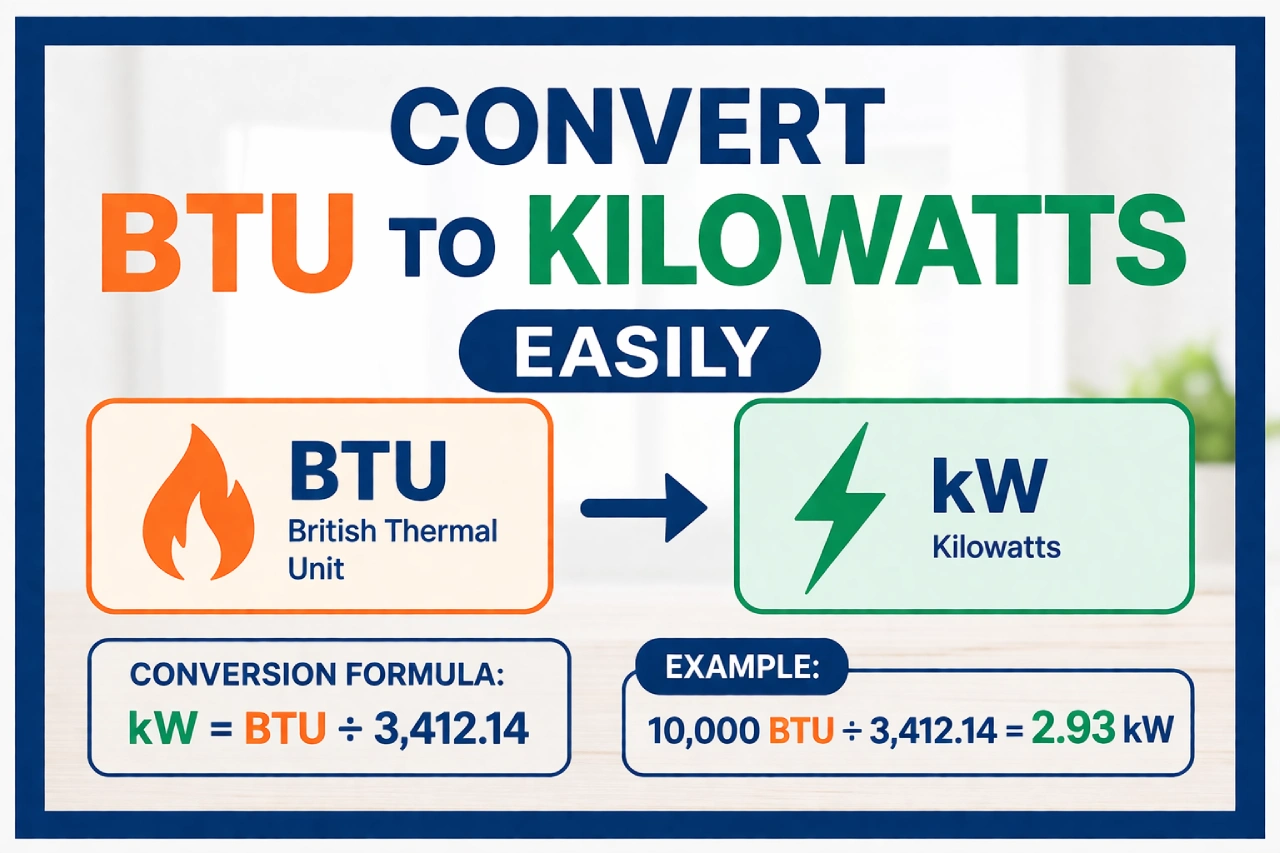
    If you’re looking for the quick answer:

    1 BTU per hour (BTU/h) = 0.000293071 kilowatts (kW).

    That means if you want to convert BTU to kW, you simply multiply the BTU value by 0.000293071.

    For example:

    • 10,000 BTU/h ≈ 2.93 kW
    • 12,000 BTU/h ≈ 3.52 kW
    • 24,000 BTU/h ≈ 7.03 kW

    This conversion is extremely common in HVAC systems, heating equipment, power ratings, and energy efficiency calculations. In the United States, heating and cooling systems are usually rated in BTUs, while most other parts of the world measure energy output in kilowatts.

    In this guide, we’ll explain exactly how BTU-to-kW conversion works, show the formula step by step, and explore real-world applications such as air conditioners, heaters, and energy systems.

    Understanding BTU

    What Is a BTU?

    A BTU (British Thermal Unit) is a unit of heat energy used primarily in the United States.

    One BTU represents the amount of heat needed to raise the temperature of one pound of water by one degree Fahrenheit.

    Although this definition may sound technical, BTUs are commonly used to measure the heating or cooling capacity of appliances such as:

    • Air conditioners
    • Furnaces
    • Heat pumps
    • Water heaters
    • Gas grills

    For example:

    • A small window air conditioner may produce 5,000 BTU/h.
    • A medium home air conditioner might deliver 12,000 BTU/h.
    • A central HVAC system may exceed 36,000 BTU/h.

    The “per hour” part (BTU/h) indicates the rate at which heat energy is transferred.

    Understanding Kilowatts (kW)

    What Is a Kilowatt?

    A kilowatt (kW) is a unit of power in the International System of Units (SI).

    One kilowatt equals:

    1 kW = 1,000 watts

    Watts measure how quickly energy is transferred or used.

    Kilowatts are widely used to describe:

    • Electrical power output
    • Generator capacity
    • Heating systems
    • Industrial machinery
    • Renewable energy systems

    For example:

    • A typical electric heater may use 1.5 kW.
    • A household microwave might use 1 kW.
    • A residential solar panel system could produce 5–10 kW.

    Because kilowatts are part of the international metric system, they are widely used worldwide.

    The BTU to kW Conversion Formula

    BTU to Kilowatts Converter

    BTU to Kilowatts

    Enter the BTU value below to convert it into kilowatts instantly.

    Result will appear here
    Formula: 1 BTU/h = 0.00029307107 kW

    The key relationship between these units is:

    1 BTU/h = 0.000293071 kW

    This value comes from converting thermal energy into electrical power units.

    Conversion Formula

    kW = BTU/h × 0.000293071

    This formula allows you to convert any BTU value into kilowatts.

    Step-by-Step Conversion Example

    Let’s convert 12,000 BTU/h to kilowatts, which is a common HVAC rating.

    Step 1: Start with the BTU value

    12,000 BTU/h

    Step 2: Multiply by the conversion factor

    12,000 × 0.000293071

    Step 3: Calculate the result

    = 3.51685 kW

    Final Result

    12,000 BTU/h ≈ 3.52 kW

    This is the cooling capacity of a 1-ton air conditioner.

    Quick BTU-to-kW Conversion Table

    Here’s a helpful chart for common values.

    BTU/hkW
    5,0001.47 kW
    10,0002.93 kW
    12,0003.52 kW
    18,0005.27 kW
    24,0007.03 kW
    36,00010.55 kW
    60,00017.58 kW

    This table is useful for quickly estimating conversions.

    Why BTU and kW Are Used in Different Systems

    The difference between BTUs and kilowatts mainly comes from historical measurement systems.

    The United States traditionally used imperial units, including BTUs, to measure heat energy.

    Most other countries adopted the metric system, where energy and power are measured using watts and kilowatts.

    As global trade and engineering collaboration increased, conversions between these units became essential.

    BTU vs kW in HVAC Systems

    One of the most common places you’ll see this conversion is in air conditioning systems.

    Example: Air Conditioner Ratings

    A typical air conditioner rating might look like this:

    • 12,000 BTU/h (cooling capacity)

    Converted to kilowatts:

    12,000 BTU/h ≈ 3.52 kW

    This helps engineers and technicians compare HVAC equipment internationally.

    Tons of Cooling

    In HVAC systems, cooling capacity is often measured in tons.

    1 ton of cooling equals:

    12,000 BTU/h

    Which equals:

    3.52 kW

    So:

    TonsBTU/hkW
    1 ton12,0003.52
    2 tons24,0007.03
    3 tons36,00010.55

    Understanding this relationship helps when selecting HVAC equipment.

    Converting kW Back to BTU

    Sometimes the reverse conversion is needed.

    The formula becomes:

    BTU/h = kW × 3412.14

    Example:

    3.52 kW × 3412.14 ≈ 12,000 BTU/h

    This confirms the earlier conversion.

    Real-World Examples of BTU to kW Conversion

    Home Heating Systems

    A gas furnace rated at 80,000 BTU/h produces:

    80,000 × 0.000293071 ≈ 23.45 kW

    Electric Heater

    A 2 kW electric heater produces approximately:

    2 × 3412 = 6,824 BTU/h

    Industrial Boilers

    Large industrial boilers may produce hundreds of thousands of BTUs per hour, which converts to large kilowatt outputs.

    Understanding these conversions helps engineers design and compare systems more effectively.

    Common Mistakes in BTU-to-kW Conversion

    Even simple conversions can lead to mistakes if the wrong factors are used.

    Forgetting the “Per Hour”

    BTUs used in HVAC are usually BTU per hour (BTU/h), not just BTU.

    Using the Wrong Conversion Factor

    Always remember:

    1 BTU/h = 0.000293071 kW

    Rounding Too Early

    Rounding intermediate calculations can slightly affect accuracy.

    Tips for Quick Mental Conversion

    Here are some useful shortcuts.

    First, remember the approximate rule:

    1,000 BTU/h ≈ 0.293 kW

    Second, remember a common HVAC benchmark:

    12,000 BTU/h ≈ 3.5 kW

    Third, remember the reverse rule:

    1 kW ≈ 3,412 BTU/h

    These simple benchmarks help estimate conversions quickly.

    Frequently Asked Questions (FAQs)

    What is 1 BTU in kilowatts?

    1 BTU/h = 0.000293071 kW.

    How many BTUs are in 1 kW?

    1 kW ≈ 3,412 BTU per hour.

    What is 12,000 BTU in kW?

    12,000 BTU/h ≈ 3.52 kW.

    Why are air conditioners rated in BTUs?

    Because HVAC systems traditionally measure heat removal capacity using BTUs.

    Why are kilowatts used internationally?

    Kilowatts are part of the metric SI system, which is the global standard.

    What is 24,000 BTU in kW?

    24,000 × 0.000293071 ≈ 7.03 kW.

    What is the easiest way to estimate BTU to kW?

    Divide the BTU value by 3,412.

    What is 5,000 BTU in kW?

    5,000 × 0.000293071 ≈ 1.47 kW.

    Are BTU and watts measuring the same thing?

    Yes. Both measure energy transfer, but in different unit systems.

    Why do HVAC technicians convert BTU to kW?

    Because electrical equipment and international systems often use kilowatts.

    Final Thoughts

    Converting BTU to kilowatts becomes simple once you understand the key relationship between these units.

    The most important rule to remember is:

    1 BTU per hour = 0.000293071 kW

    This means that systems rated in BTUs—such as air conditioners, furnaces, and heaters—can easily be compared with international equipment rated in kilowatts.

    Understanding this conversion is particularly helpful when selecting HVAC systems, comparing energy efficiency, or interpreting international equipment specifications.

    Once you remember the simple benchmarks—12,000 BTU/h equals about 3.5 kW and 1 kW equals about 3,412 BTU/h—you can perform quick conversions with confidence.

    And the next time you see a heating or cooling system rated in BTUs, you’ll know exactly how much power that represents in kilowatts.

  • Convert 6.6 Liters to Cubic Inches Easily

    Convert 6.6 Liters to Cubic Inches Easily

    If you want the quick answer first:

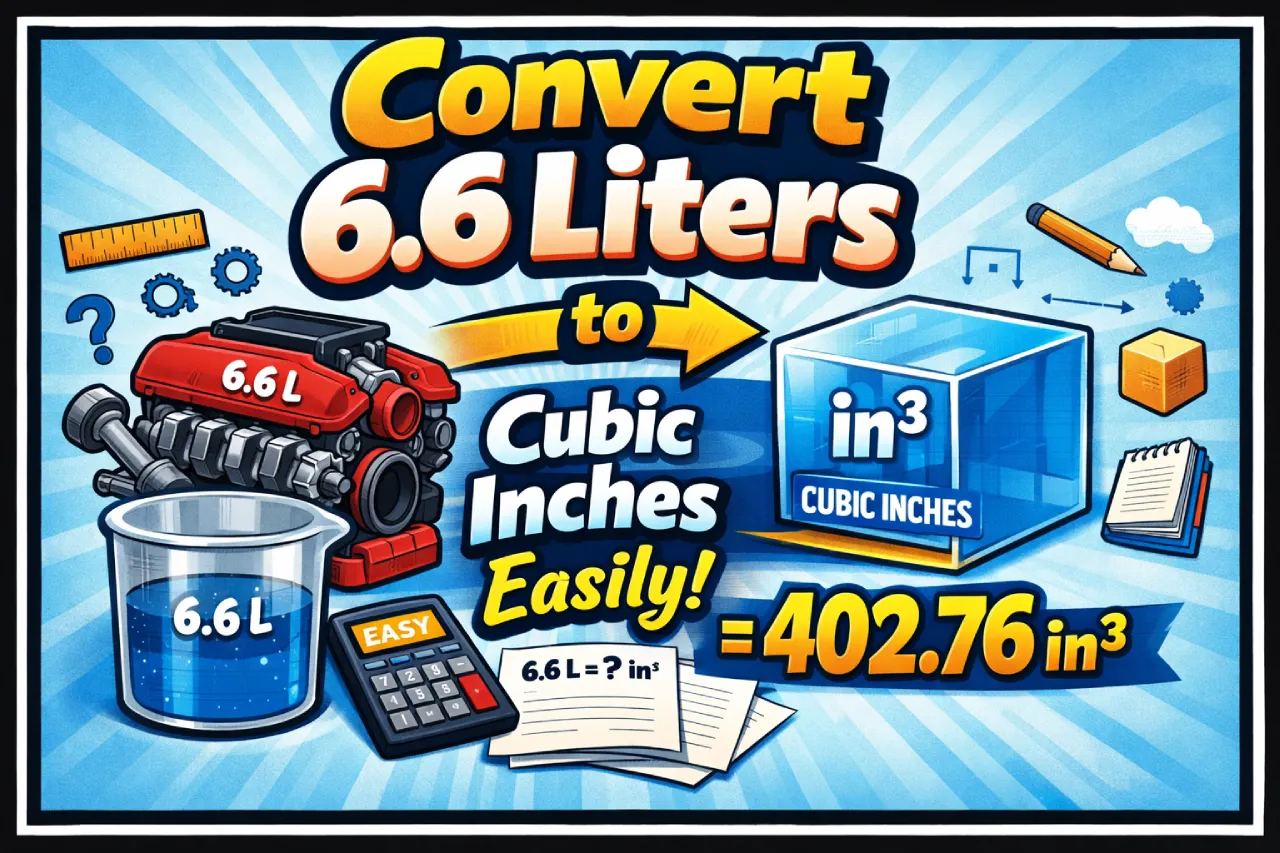
    6.6 liters = 402.76 cubic inches (approximately).

    This means that when you convert 6.6 liters to cubic inches, the result is about 402.76 in³. This conversion is commonly used when comparing engine displacement, container volume, and mechanical specifications, especially when measurements move between the metric system (liters) and the U.S. customary system (cubic inches).

    For example, many vehicles list engine sizes in liters worldwide, while older American automotive specifications often describe engine displacement in cubic inches. Converting between these units helps bridge the gap between these two systems.

    In this guide, we’ll explain how to convert 6.6 liters into cubic inches, show the formula behind the calculation, explore real-world examples such as engine sizes, and provide practical tips for performing similar conversions quickly.

    Understanding Liters and Cubic Inches

    Before performing the conversion, it’s helpful to understand what each unit represents.

    What Is a Liter?

    A liter (L) is a metric unit of volume commonly used around the world.

    One liter equals:

    1 liter = 1,000 cubic centimeters

    or

    1 liter = 0.001 cubic meters

    Liters are used for measuring volumes such as:

    • Engine displacement
    • Liquid containers
    • Fuel capacity
    • Beverage bottles
    • Scientific measurements

    For example:

    • A typical soda bottle contains 2 liters
    • A car engine might be 2.0 L or 3.5 L
    • A water bottle might hold 0.5 liters

    Liters are widely used because the metric system provides a consistent way to measure volume.

    What Is a Cubic Inch?

    A cubic inch (in³) is a unit of volume in the U.S. customary measurement system.

    It represents the volume of a cube that measures one inch on each side.

    Cubic inches are commonly used in:

    • Engine displacement (especially older American vehicles)
    • Mechanical engineering
    • Manufacturing specifications
    • Small container volumes

    For example:

    • Classic muscle car engines might measure 350 cubic inches
    • Some V8 engines exceed 400 cubic inches

    Because cubic inches are smaller than liters, conversions often produce larger numbers.

    The Formula for Converting Liters to Cubic Inches

    Liters to Cubic Inches Converter

    Liters to Cubic Inches

    Enter liters below to instantly convert into cubic inches.

    Result will appear here
    1 liter = 61.0237 cubic inches

    The key relationship between liters and cubic inches is:

    1 liter = 61.0237 cubic inches

    Using this value, we can create the conversion formula:

    Cubic Inches = Liters × 61.0237

    Applying the Formula

    To convert 6.6 liters to cubic inches:

    6.6 × 61.0237 = 402.7564 cubic inches

    Rounded to two decimal places:

    6.6 L ≈ 402.76 cubic inches

    Step-by-Step Conversion

    Let’s walk through the calculation clearly.

    Step 1: Start with the liter value

    6.6 liters

    Step 2: Multiply by the conversion factor

    6.6 × 61.0237

    Step 3: Perform the calculation

    = 402.7564 cubic inches

    Final Result

    6.6 liters equals approximately 402.76 cubic inches.

    Visualizing 6.6 Liters

    Numbers become easier to understand when compared with familiar examples.

    Engine Displacement

    Many modern truck engines measure around 6.0–7.0 liters.

    A 6.6-liter engine is commonly found in large V8 truck engines, which explains why this conversion often appears in automotive discussions.

    For example, a 6.6L engine is roughly equivalent to 403 cubic inches, which is a very large engine by modern standards.

    Liquid Volume

    6.6 liters of liquid equals:

    • About 1.74 gallons
    • Slightly more than three large soda bottles

    These comparisons help make the volume easier to visualize.

    Quick Liters-to-Cubic-Inches Conversion Table

    Here’s a reference chart for nearby values.

    LitersCubic Inches
    4.0 L244.09 in³
    5.0 L305.12 in³
    6.0 L366.14 in³
    6.6 L402.76 in³
    7.0 L427.17 in³
    8.0 L488.19 in³

    Tables like this make it easy to estimate conversions without repeating calculations.

    Why Convert Liters to Cubic Inches?

    There are several situations where this conversion becomes useful.

    Automotive Engines

    Modern vehicles often list engine size in liters, while older American engines are described in cubic inches.

    For example:

    • A 6.6L engine ≈ 403 cubic inches

    This helps enthusiasts compare engines across different generations.

    Mechanical Engineering

    Some engineering specifications use cubic inches while others use metric units.

    Conversions help maintain consistency between systems.

    Manufacturing and Product Design

    Products manufactured internationally often list volumes in liters but may be interpreted using cubic inches in the United States.

    Education and Science

    Students studying measurement systems frequently convert between metric and customary units.

    Liters vs Cubic Inches: Key Differences

    Although both units measure volume, they belong to different systems.

    UnitMeasurement SystemEquivalent
    LiterMetric system1,000 cm³
    Cubic inchU.S. customary system16.387 cm³

    Understanding these relationships helps when comparing volumes internationally.

    Converting Cubic Inches Back to Liters

    Sometimes the reverse conversion is needed.

    The formula becomes:

    Liters = Cubic Inches ÷ 61.0237

    Example

    402.76 ÷ 61.0237 ≈ 6.6 liters

    This confirms the earlier calculation.

    Common Mistakes in Volume Conversion

    Even simple conversions can lead to errors if the wrong factors are used.

    Using the Wrong Conversion Factor

    Always remember:

    1 liter = 61.0237 cubic inches

    Rounding Too Early

    Rounding during intermediate steps can slightly change the final result.

    Confusing Cubic Units

    Volume units are cubic measurements, not linear measurements.

    That means they represent three-dimensional space.

    Tips for Quick Mental Conversion

    Here are a few helpful tricks.

    First, remember the approximate rule:

    1 liter ≈ 61 cubic inches

    Second, multiply the liter value by 60 for a quick estimate.

    Example:

    6.6 × 60 ≈ 396 cubic inches

    This estimate is close to the exact value of 402.76 cubic inches.

    Third, remember a useful benchmark:

    5 liters ≈ 305 cubic inches

    This helps estimate larger engine sizes quickly.

    Real-World Examples of 6.6 Liters

    Truck Engines

    Many heavy-duty pickup trucks use engines around 6.6 liters, which translates to roughly 403 cubic inches.

    Industrial Equipment

    Some industrial pumps or compressors list displacement values in liters but may be compared using cubic inches.

    Liquid Containers

    Large containers or tanks might hold volumes around 6–7 liters, depending on the application.

    Understanding the cubic inch equivalent helps compare specifications more easily.

    Frequently Asked Questions (FAQs)

    How many cubic inches is 6.6 liters?

    6.6 liters equals approximately 402.76 cubic inches.

    How do you convert liters to cubic inches?

    Multiply the liter value by 61.0237.

    Why are engine sizes measured in liters?

    Most modern automotive manufacturers use the metric system.

    What is 6.6 liters in gallons?

    6.6 liters ≈ 1.74 gallons.

    Is 6.6 liters a large engine?

    Yes. A 6.6L engine is considered large and is typically found in trucks or high-performance vehicles.

    How many cubic centimeters are in 6.6 liters?

    6.6 liters = 6,600 cubic centimeters (cc).

    What is the easiest way to estimate liters to cubic inches?

    Multiply liters by about 61.

    How many liters are in 400 cubic inches?

    400 in³ ≈ 6.56 liters.

    Why do older American engines use cubic inches?

    Historically, the U.S. automotive industry used the imperial measurement system.

    Can calculators convert liters to cubic inches automatically?

    Yes. Many scientific calculators and conversion tools support unit conversions.

    Final Thoughts

    Converting 6.6 liters to cubic inches is straightforward once you know the conversion factor.

    Using the formula liters × 61.0237, we find that:

    6.6 liters equals approximately 402.76 cubic inches.

    This conversion is particularly useful when comparing engine sizes, container volumes, or mechanical specifications across measurement systems.

    Once you remember the key rule—1 liter equals about 61 cubic inches—you’ll be able to estimate similar conversions quickly.

    And the next time someone mentions a 6.6L engine, you’ll immediately know that it’s roughly a 403 cubic inch powerhouse.

  • 56 Inches to Meters (Formula + Examples)

    56 Inches to Meters (Formula + Examples)

    If you’re looking for the quick answer:

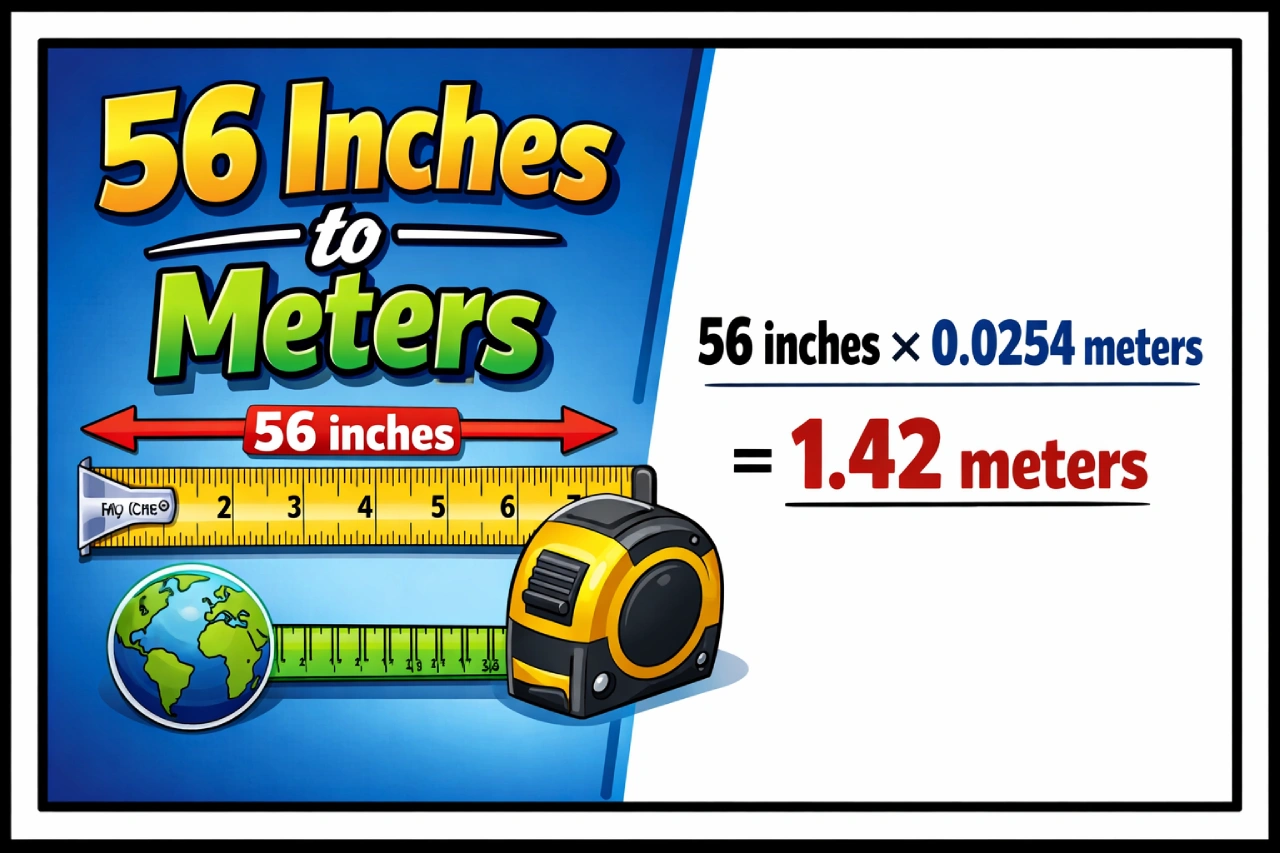
    56 inches = 1.4224 meters.

    So when you convert 56 inches to meters, the result is approximately 1.42 m when rounded to two decimal places.

    This type of conversion is common when translating measurements from the U.S. customary system, which uses inches and feet, to the metric system, which uses meters and centimeters. Since most countries use the metric system, understanding this conversion helps when reading international product specifications, engineering measurements, or global size standards.

    In this guide, we’ll explain how to convert 56 inches into meters, walk through the formula step by step, explore practical examples, and show how inches relate to meters in real-world measurements.

    The Formula for Converting Inches to Meters

    Inches to Meters Converter

    Inches to Meters

    Enter inches below to convert them into meters.

    Result will appear here

    The key relationship between inches and meters is:

    1 inch = 0.0254 meters

    This value is internationally standardized.

    The conversion formula is:

    Meters = Inches × 0.0254

    Applying the Formula

    To convert 56 inches into meters:

    56 × 0.0254 = 1.4224 meters

    So:

    56 inches = 1.4224 meters

    For most everyday purposes, we round the result:

    56 inches ≈ 1.42 meters

    Step-by-Step Conversion

    Let’s break the process down clearly.

    Step 1: Start with the inch value

    56 inches

    Step 2: Multiply by the conversion factor

    56 × 0.0254

    Step 3: Perform the calculation

    = 1.4224 meters

    Final Result

    56 inches equals approximately 1.42 meters.

    Converting 56 Inches to Feet and Meters

    Sometimes it helps to understand measurements in multiple units.

    Convert Inches to Feet

    Since:

    1 foot = 12 inches

    56 ÷ 12 = 4.67 feet

    So:

    56 inches ≈ 4.67 feet

    Convert Feet to Meters

    4.67 feet ≈ 1.42 meters

    This confirms the earlier result.

    Quick Inches-to-Meters Conversion Table

    Here’s a helpful chart showing similar measurements.

    InchesMeters
    24 in0.61 m
    36 in0.91 m
    48 in1.22 m
    56 in1.42 m
    60 in1.52 m
    72 in1.83 m

    This table makes it easier to estimate conversions quickly.

    Visualizing 56 Inches

    Understanding numbers becomes easier when we compare them to familiar objects.

    Human Height

    A height of 56 inches equals about 4 feet 8 inches, which is close to the height of a young teenager.

    In metric terms, that equals about 1.42 meters.

    Furniture Dimensions

    Some tables, cabinets, or shelves may measure around 55–60 inches tall, which is roughly 1.4–1.5 meters.

    Television Width

    A 55-inch television often has a screen width close to 48 inches, meaning the entire frame might measure around 56 inches wide depending on the model.

    Understanding these comparisons helps you picture the measurement more clearly.

    Why Convert Inches to Meters?

    There are several situations where converting inches to meters is helpful.

    International Product Specifications

    Many products manufactured outside the United States list dimensions in meters or centimeters.

    Converting inches to meters helps consumers understand the size.

    Engineering and Manufacturing

    Engineers often work with metric units even when designs originate from U.S. measurements.

    Travel and International Communication

    When communicating measurements internationally, metric units are more widely understood.

    Education and Science

    Scientific research and global standards rely heavily on the metric system.

    Inches vs Meters: Key Differences

    Although both units measure length, they belong to different measurement systems.

    UnitMeasurement SystemEquivalent
    InchU.S. customary system2.54 cm
    MeterMetric system39.37 inches

    Because meters are larger units, measurements expressed in meters often contain decimals when converted from inches.

    Converting Meters Back to Inches

    Sometimes the reverse conversion is required.

    The formula becomes:

    Inches = Meters ÷ 0.0254

    or

    Inches = Meters × 39.37

    Example

    1.4224 × 39.37 ≈ 56 inches

    This confirms the earlier conversion.

    Common Mistakes When Converting Inches to Meters

    Even simple conversions can lead to errors.

    Using the Wrong Conversion Factor

    Always remember:

    1 inch = 0.0254 meters

    Confusing Centimeters with Meters

    Remember:

    1 meter = 100 centimeters

    Rounding Too Early

    It’s best to round only after completing the full calculation.

    Tips for Quick Mental Conversion

    Here are a few simple tricks.

    First, remember that 40 inches is about 1 meter.

    Second, multiply inches by 0.025 for a quick estimate.

    Example:

    56 × 0.025 ≈ 1.4 meters

    This estimate is close to the exact value of 1.4224 meters.

    Third, remember the benchmark:

    1 meter ≈ 39 inches

    This helps estimate conversions quickly.

    Real-World Examples of 56 Inches

    Let’s look at situations where this measurement might appear.

    Height Measurements

    A child or teenager may have a height around 56 inches, which equals about 1.42 meters.

    Furniture Design

    A tall bookshelf or cabinet could measure about 56 inches tall.

    Equipment Dimensions

    Certain machines, cabinets, or display units may list their height as 56 inches in product specifications.

    Understanding the meter equivalent helps when comparing products internationally.

    Frequently Asked Questions (FAQs)

    How many meters is 56 inches?

    56 inches equals approximately 1.4224 meters.

    How do you convert inches to meters?

    Multiply the number of inches by 0.0254.

    What is 56 inches in feet?

    56 inches equals 4 feet 8 inches.

    Is 56 inches close to 1.5 meters?

    Yes, but slightly smaller.
    1.5 meters equals about 59 inches.

    Why is 0.0254 used in the formula?

    Because 1 inch equals exactly 0.0254 meters.

    How many centimeters is 56 inches?

    56 inches ≈ 142.24 centimeters.

    Is 56 inches tall for a person?

    It equals about 4′8″, which is typical for a young teenager.

    Why do different countries use meters instead of inches?

    Most countries follow the metric system, which is the global standard.

    Can calculators convert inches to meters automatically?

    Yes. Most scientific calculators and conversion apps include unit conversions.

    What is the easiest way to estimate inches to meters?

    Multiply inches by 0.025 for a quick estimate.

    Final Thoughts

    Converting 56 inches to meters is straightforward once you understand the relationship between inches and meters.

    Using the formula inches × 0.0254, we find that:

    56 inches equals approximately 1.42 meters.

    Understanding this conversion helps when comparing international product dimensions, interpreting engineering drawings, or translating measurements between the U.S. and metric systems.

    Once you remember the simple rule—1 inch equals 0.0254 meters—you’ll be able to convert measurements quickly and confidently.

    And the next time you see a dimension like 56 inches, you’ll know it’s roughly 1.4 meters tall.